



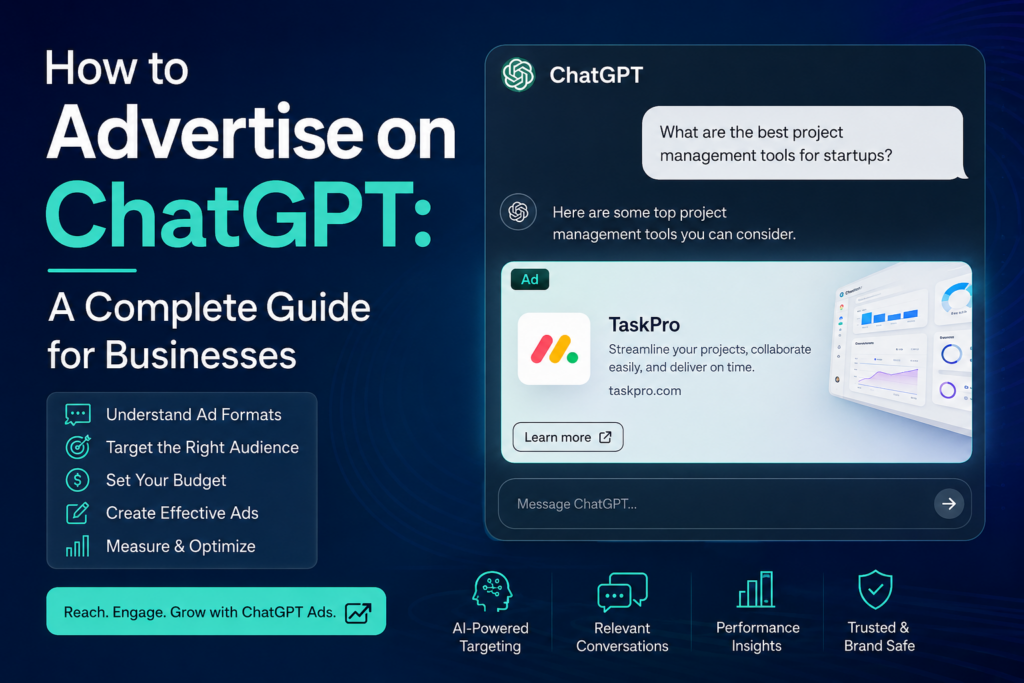
How to Advertise on ChatGPT: A Complete Guide for Businesses
Something has quietly changed about how people look for things online. Fewer users type a query into a search bar and scroll through ten links — more just ask an AI assistant directly. That shift is why ChatGPT Ads exist now, giving advertisers a way to show up inside conversations instead of beside a results page. ChatGPT advertising isn’t a copy-paste of search advertising — relevance leans on conversation flow and what the person actually needs. The real question businesses are asking: how to advertise on ChatGPT.
ChatGPT Ads: What are they?
ChatGPT Ads are ads that show up inside the ChatGPT app. They are kept separate from what the assistant writes. Usually, you see them right after the reply. After ChatGPT gives you an answer, the ad may appear below it.
That timing matters. A brand isn’t interrupting a search; it’s showing up right after someone has thought through a problem or compared a few options. For marketers, advertising in AI search is still new ground, worth learning now rather than later.
How Does ChatGPT Advertising Work?
It breaks down into four stages, none complicated on the surface.
Step 1: A User Starts a Conversation Someone asks a question or brings up a product, service, or problem.
Step 2: Context and Intent Are Considered The system reads signals from the conversation — what’s being discussed, and what the person wants from it.
Step 3: Relevant Ads Are Selected The ad’s title, copy, landing page, and any advertiser-set context hints factor into which ad gets picked.
Step 4: The Advertisement Is Displayed If an ad clears that bar, it shows up beneath the response.
One thing worth remembering: context hints point toward relevant topics or keywords, but they aren’t exact-match targeting. Setting one up doesn’t guarantee delivery.
How to promote on ChatGPT: a practical guide
1. Pick one goal first. Choose what you want from day one. It might be reach, clicks, leads, sales, or conversions.
2. Know who you are speaking to. Think about what your buyers ask when they use an AI tool. Also think about the problems they try to solve.
3. Make ad text that fits the search intent. Do not only list your offer. Write clear headlines and simple descriptions that match what people are trying to figure out.
4. Build a landing page that matches the ad. The page should deliver what the ad claims. It should also tell the visitor what to do next.
5. Add Context Hints. Provide topics and keywords that show where your product genuinely fits.
6. Set Up Tracking. Lean on campaign reporting and UTM parameters so you’re not guessing what’s working.
Businesses getting real value from ChatGPT ads for businesses build around relevance and clarity, not old search tactics dragged over and hoped to translate.
ChatGPT Ads vs Google Ads
| ChatGPT Ads | Google Ads |
| Built around conversational experiences | Tied mainly to search and Google’s ad network |
| Relevance shaped by context and intent | Relies on keywords, audiences, targeting signals |
| Shows up inside the ChatGPT experience | Shows up across Google’s broader ecosystem |
| Designed for AI-driven discovery | A long-established search channel |
Neither cancels out the other — most businesses will find room for both.
Why ChatGPT Ads Matter for Businesses
A few reasons this is worth paying attention to:
- It reaches people while they’re actively exploring or deciding.
- It ties paid promotion directly to conversational discovery.
- It’s a chance to get in early, before the channel gets crowded.
- It offers a real look at how AI is reshaping purchase habits.
As AI-powered search grows, ChatGPT advertising looks less like an experiment and more like something businesses need a plan for.
How Businesses Can Prepare for AI Advertising
A few things worth doing now:
- Build landing pages that are genuinely strong.
- Keep brand messaging consistent across every channel.
- Publish content that’s accurate and useful, not filler.
- Get comfortable with how people phrase conversational searches.
- Strengthen SEO, AEO, and GEO strategies together.
- Set up proper conversion and UTM tracking from day one.
This is where a team like Adox Global’s digital marketing specialists adds value, pairing the technical setup with a strategy that fits the business.
Conclusion
Advertising has stopped living solely inside traditional search — it’s stretching into conversational AI, and ChatGPT Ads are one of the clearest signs of that. For businesses ready to explore it, the opportunity sits in strong messaging, relevant landing pages, and honest tracking. Adox Global works alongside businesses figuring out that shift, one campaign at a time.
FAQs
1. What are ChatGPT Ads?
Advertisements shown inside the ChatGPT experience, alongside the assistant’s own responses.
2. How do ChatGPT Ads work?
Context, intent, landing-page relevance, ad copy, and context hints all play into which ad gets chosen.
3. Where do ads appear in ChatGPT?
Below ChatGPT’s response.
4. How much do ChatGPT Ads cost?
ChatGPT Ads runs on CPM and CPC buying options, with campaign objectives and bidding shaping the final cost.
5. Can advertisers target specific keywords in ChatGPT?
Context hints can include relevant topics or keywords, but they aren’t exact-match targeting and don’t guarantee delivery.
6. How can businesses measure ChatGPT Ads?
Impressions, clicks, spend, CTR, average CPC, average CPM, conversions, and UTM tracking.
7. Are ChatGPT Ads available to everyone ?
No — OpenAI states ads aren’t shown to Plus, Pro, or Business users, or accounts identified as belonging to users under 18.
8. What is the difference between ChatGPT Ads and Google Ads ?
One centers on conversational advertising, the other on traditional search, each with its own relevance signals.
9. Are ChatGPT Ads relevant to digital marketing agencies?
Yes — they tie into SEO, AEO, GEO, paid advertising, and AI-driven discovery.
10. How should businesses prepare for AI advertising?
Strong landing pages, useful content, clear messaging, accurate tracking, and strategy built around conversational intent.