


Performance Marketing vs Organic Growth: Why Smart Brands Are Combining Both
Should you put money into ads, or wait for organic traffic to build up? Almost every brand asks this. Both routes work, just not in the same way. Paid gets eyeballs on you this week. Organic takes a while, but once it’s there, it tends to stay.
Brands that grow well stopped picking one over the other long ago. Ad spend and SEO aren’t rivals fighting for the same rupee, they’re two arms of the same body. A solid Digital marketing plan runs both side by side, paid for the short-term push, organic for the visibility that compounds underneath it.
What Is Performance Marketing?
Performance marketing ties every rupee spent to something you can measure. You’re paying for things like:
- Leads
- Website conversions
- Sales
- Clicks
- App downloads
Most of this happens through Google Ads or paid social. The appeal is simple, you reach a narrow, specific audience and know within days whether it’s paying off. Numbers like CPC, CPA, conversion rate, and ROAS tell you exactly where you stand. If a brand needs eyes on it fast, this is the route that gets there.
What Is Organic Growth?
Organic works on a completely different clock. Instead of buying attention click by click, you earn it. That happens through:
- SEO
- Helpful content
- Social media
- Email marketing
- Brand authority
It’s slower, no shortcut around that part. A top blog can still bring in readers even after you forget you wrote it. To get that kind of reach, you usually need to post more often. You also have to work on the site so it shows up in search. Another part of improve organic growth is figuring out what people really type into Google. Then you can get attention step by step, not by paying for it.
Performance Marketing vs Organic Growth: The Key Difference
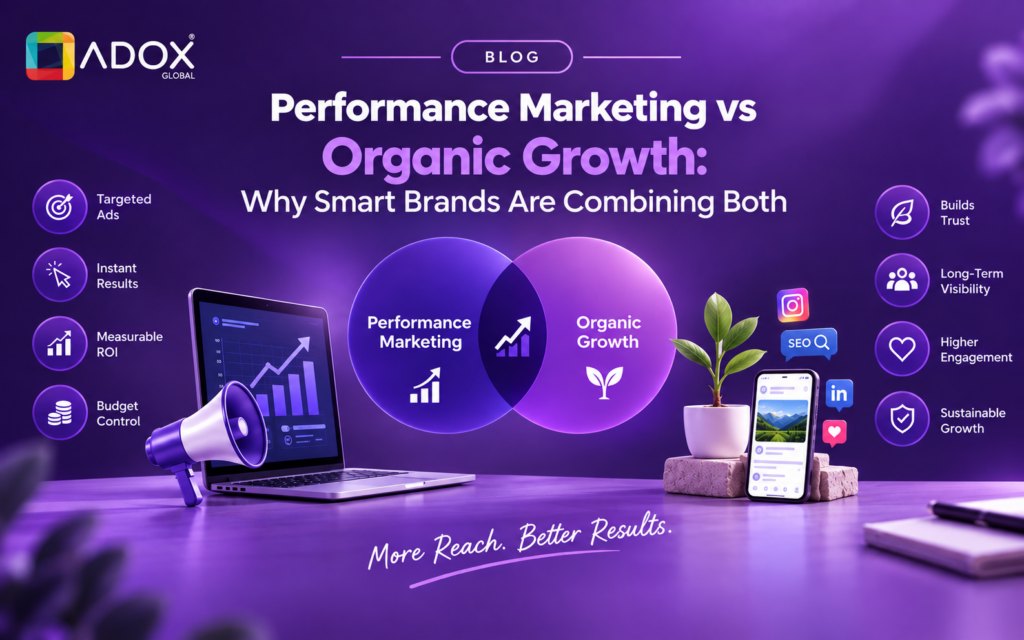
| Performance Marketing | Organic Growth |
| Faster results | Takes more time |
| Requires ongoing ad spend | Builds long-term value |
| Highly measurable | Focuses on visibility and authority |
| Useful for immediate campaigns | Useful for sustainable traffic |
| Can scale quickly | Builds compounding results |
Neither wins by default. What fits depends on the business itself, its budget, industry, audience, and stage of growth. Treating this as a strict either-or misses the point.
Why Combining Both Creates a Stronger Strategy
This is where the real argument sits. Paid and organic aren’t competing for the same job, they’re doing two different jobs that support each other. Ads bring traffic in almost right away. Organic slowly stacks up visibility that keeps paying off after the campaign budget runs dry.
Paid campaigns double as a testing ground too. Brands run quick experiments on:
- Headlines
- Offers
- Audiences
- Landing pages
- Content ideas
Whatever wins in those tests can shape the SEO and content plan going forward. Organic content gives people real material to read once they click. It also keeps them from bouncing back when the page looks dull or empty. Put the pieces together and the path feels smoother. Instead of many separate efforts, it becomes one clear flow for the user. Search, ads, social posts, content, and the site should all fit the same plan, it also improve organic growth.
That is the base of Adox Global’s approach. The team brings SEO, Google Ads, social media, content work, CRO, and website build tasks under one leadership. They are handled in one place, not as separate companies.
How to Build a Balanced Paid + Organic Strategy
Step 1: Define the goal Figure out what matters right now, leads, sales, awareness, or just traffic.
Step 2: Use paid campaigns for quick validation Test audiences, messaging, offers, and keywords before pouring budget elsewhere.
Step 3: Build organic assets Put together SEO pages, blogs, and social content around what people are genuinely searching for.
Step 4: Connect the data Take what the paid side reveals, strong keywords, best audiences, winning content angles, and feed it into the organic strategy.
Step 5: Optimize continuously Keep tweaking landing pages, content, and targeting as fresh data comes in.
The Long-Term Advantage of Combining Both
One thing this combination does well is loosen a brand’s grip on any single traffic source. Paid keeps demand flowing while organic visibility builds underneath it. Give it enough time and that organic presence starts pulling weight on its own, meaning less money needed on ads for certain searches down the road.
None of this is about spending more or publishing content for the sake of a number. It’s about making sure every channel earns its keep. That’s the gap Adox Global tends to fill, pulling these pieces together instead of letting them run in separate silos.
Conclusion
Performance marketing and organic growth were never really at odds. One gives you speed, sharp targeting, and results you can see right away. The other gives you authority and visibility that outlasts the campaign that started it.
Brands chasing real, lasting growth need both, not one propped up while the other gets ignored. Worth asking yourself, is your Digital marketing strategy actually balancing the two, or leaning hard on just one?