



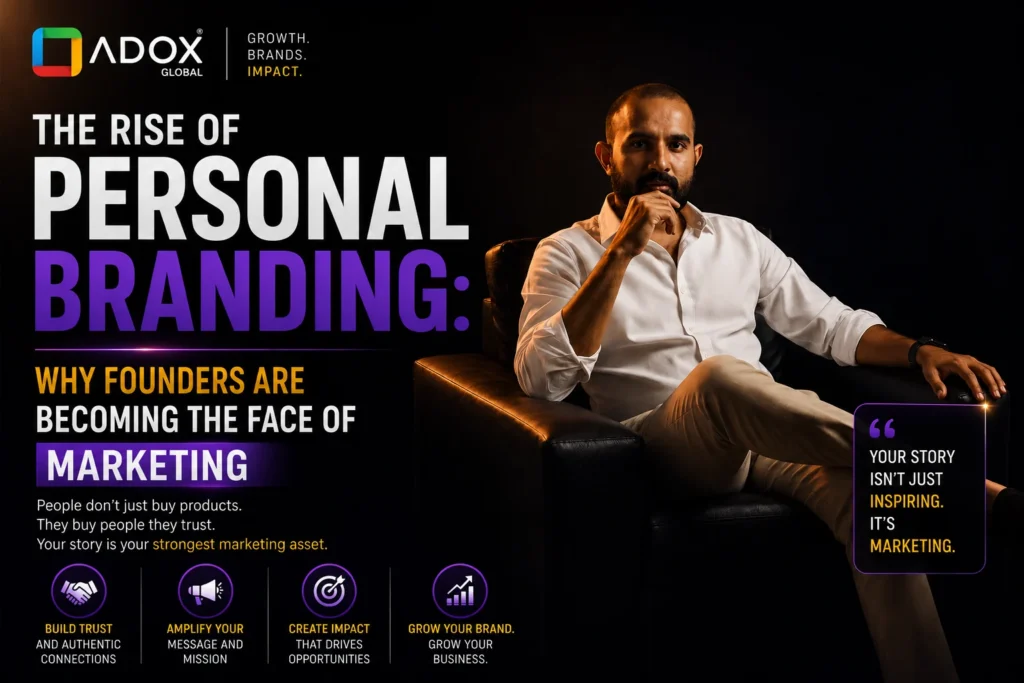
The Rise of Personal Branding: Why Founders Are Becoming the Face of Marketing
“People trust people more than brands.”
That is not just a catchy line anymore; it is how modern marketing actually works.
Today, personal branding for founders is shaping how businesses grow, connect, and build trust. We are moving away from a time where companies spoke through polished campaigns, into a space where real people share real experiences. This shift has made founder-led marketing one of the most effective approaches in digital growth.
Platforms like LinkedIn and Instagram have made it easier than ever for founders to show up, speak directly to their audience, and build meaningful relationships. This is no longer limited to influencers or creators. Founders themselves are becoming the voice of their brand, and that is exactly what is driving attention.
Understanding this shift is key to building a strong personal branding strategy today.
The Shift from Brand Marketing to Founder-Led Marketing
Traditional marketing focused on the company as a whole. Logos, taglines, and campaigns were designed to create a strong brand identity. While that still matters, it is no longer enough on its own.
People today are more aware, more selective, and more interested in authenticity. They want to know who is behind the business. They want to hear opinions, stories, and experiences. This is where the difference between founder vs company branding becomes clear.
A company page may share updates, but a founder shares a perspective. A brand may promote a product, but a founder builds a connection. That connection is what drives engagement.
This is why CEO branding is becoming more visible. Founders are stepping forward, not just to promote their business, but to represent it. They are creating content, sharing insights, and building conversations.
At the core of this shift is authenticity in marketing. People can easily sense when something feels scripted. What works now is honesty, clarity, and relatability.
Why Personal Branding is Powerful for Founders
A strong personal branding for founders approach creates real impact, not just online visibility.
1. Builds Trust
When founders consistently show up and share valuable insights, they naturally develop audience trust. People begin to see them as reliable and knowledgeable.
2. Creates Emotional Connection
Through storytelling in marketing, founders can talk about their journey, challenges, and lessons learned. This makes the brand feel human rather than distant.
3. Improves Brand Visibility
When a founder becomes recognizable, the business gains attention along with them. People remember faces faster than logos.
4. Creates New Opportunities
A strong digital presence attracts inbound opportunities like collaborations, partnerships, and leads without constant outreach.
5. Establishes Thought Leadership
When founders share opinions and industry insights, they position themselves as experts. This strengthens credibility and long-term influence.
These are some of the most valuable benefits of personal branding in business, especially in competitive markets.
Key Elements of a Strong Personal Brand
Building a strong personal branding strategy is not about being everywhere. It is about being clear, consistent, and genuine.
Clarity
Founders need to define what they stand for, who they want to reach, and what they want to be known for. Without this, content feels scattered and ineffective.
Authentic Storytelling
Sharing real experiences, including failures and lessons, creates humanized marketing that people can relate to.
Consistency
A strong LinkedIn personal branding strategy or social presence is built by showing up regularly with valuable content. It is not about going viral once, but about staying visible over time.
Strong Digital Presence
A well-optimized profile with clear messaging strengthens digital presence and builds credibility instantly.
Content Strategy for Founder Branding
Content is the foundation of founder-led marketing. Without it, there is no visibility or engagement.
A good content strategy includes a mix of different types of posts:
- Educational content helps people learn something useful.
- Personal stories build connection.
- Opinion-based posts show perspective and encourage discussion.
- Behind-the-scenes content makes the brand feel real.
Balancing these is important.
- 40 percent should focus on value-driven content.
- 30 percent should focus on personal storytelling.
- 20 percent should focus on authority-building insights.
- 10 percent should focus on promotion.
This approach supports building trust through personal branding without making the content feel sales-driven.
Platforms That Drive Personal Branding
Choosing the right platform makes a big difference in how a brand grows.
LinkedIn is one of the strongest platforms for B2B growth. It is ideal for professionals who want to build authority and visibility through a clear LinkedIn personal branding strategy.
Instagram works well for relatability and visual storytelling. It allows founders to show a more personal side while still maintaining a professional image.
Video Platforms
YouTube and short-form video platforms are powerful for building deeper engagement. They help strengthen thought leadership by allowing founders to explain ideas in detail.
The goal is not to be active everywhere, but to be consistent where the audience is most active.
Common Mistakes to Avoid
Many founders start strong but struggle to maintain consistency.
Inconsistent Posting
Without consistency, it becomes difficult to build trust or visibility.
Over-Promotion
Constantly selling products or services can push the audience away. Value should always come first.
Copying Others
While inspiration is helpful, a lack of originality weakens identity. Authenticity always performs better.
Ignoring Engagement
Responding to comments and messages builds stronger relationships and increases reach.
Lack of Positioning
Without a defined message, it is hard to build strong brand visibility over time.
Measuring the Impact of Personal Branding
A strong personal branding strategy should always be measurable.
Engagement Growth
Growth in followers and engagement is one clear indicator. It shows that content is reaching and connecting with people.
Inbound Leads
When people start reaching out directly, it reflects trust and credibility.
Collaboration Opportunities
Speaking engagements, partnerships, and collaborations indicate growing influence.
Website Traffic
Traffic coming from personal platforms shows how digital presence supports business goals.
Industry Recognition
Over time, recognition within the industry becomes one of the strongest outcomes of personal branding for founders.
Future of Marketing: Human-Centric Brands
Marketing is becoming more human with every passing year.
In the future, personal branding for founders will not be optional. It will be expected. Audiences will look for the person behind the business before they trust the business itself.
While AI will continue to support content creation, real human stories will remain the core of connection. This balance will define successful brands.
Businesses that focus on brand building for entrepreneurs through strong personal identities will stand out in crowded markets.
FAQs
1. What is personal branding for founders?
Personal branding for founders is the process of building a public identity based on expertise, values, experiences, and personality. It helps founders create trust, visibility, and stronger audience connections while representing their business.
2. Why is founder-led marketing becoming popular?
Founder-led marketing is growing because people trust real individuals more than traditional brand messaging. Audiences prefer authentic stories, insights, and experiences from founders rather than polished corporate campaigns.
3. Which platform is best for founder personal branding?
The best platform depends on the target audience. LinkedIn is highly effective for B2B networking and thought leadership, while Instagram works well for visual storytelling and audience engagement.
4. How can founders build a strong personal brand?
Founders can build a strong personal brand by sharing valuable content consistently, telling authentic stories, engaging with their audience, and maintaining a clear message across digital platforms.
5. What are the benefits of personal branding in business?
A strong personal brand improves trust, increases brand visibility, creates networking opportunities, attracts leads, and positions founders as industry experts. It also helps businesses stand out in competitive markets.
Conclusion
People connect with people, not logos. That idea is shaping the future of marketing.
Founder-led marketing is not just a trend. It is a shift in how trust is built and how businesses grow.
When founders show up with clarity, consistency, and authenticity, they create lasting impact. They build relationships, not just reach.
Learning how founders build personal brand is one of the most valuable steps any entrepreneur can take today.
If you are a founder, this is a good time to look at your own presence.
- Are you visible enough?
- Are you sharing your story?
- Are you building trust consistently?
You do not need to start big. Start small, stay consistent, and focus on value.